
The Best Commercial Coffee Machines for Australian Businesses

Choosing the best commercial coffee machine for your business often involves more than simply comparing brands and purchase prices. The correct machine needs to handle your busiest trading periods, suit your menu, fit your workspace and deliver consistently great coffee without creating unnecessary operating costs for you.
For Australian coffee shops, restaurants and hospitality businesses, the decision often comes down to the expected coffee volume, the skill of the staff, workflow, budget and access to reliable servicing. A high-volume busy coffee shop may need a different setup from a small neighbourhood coffee shop, restaurant or self-service venue.
In this guide, we will compare commercial espresso machines and automatic coffee systems that are available through Service Sphere, we will explain what to look for before buying, and outline how to match equipment to your business requirements.
The best coffee machine is not necessarily the most expensive machine or the one with the most features. It’s the machine that meets your operational needs and represents good overall value over its working life.
How to Choose the Right Commercial Coffee Machine
Before you compare individual coffee machine models, consider how your business will use the machine. Start with these five questions:
- How many coffees do you currently serve per day? Estimate your daily sales and, more importantly, the number of drinks you need to produce in a short space of time during your busiest 15–30 minutes.
- What drinks are you serving on your menu? A milk-heavy menu places slightly different demands on steaming capacity and workflow than a venue serving mostly espresso-based black coffee.
- Who will operate the coffee machine? More experienced baristas may prefer greater manual control, while businesses with a frequent staff turnover may benefit more from more automated coffee machines.
- How much available space and infrastructure do you have? Check your bench dimensions, your current power supply, plumbing, drainage and water filtration before selecting a coffee machine model.
- What is your total budget? Allow for the coffee grinder, installation fee, filtration, accessories, cleaning products, servicing and potential downtime—not just the machine itself.
Once you understand these 5 requirements, you can narrow the options to machines that suit your business rather than paying for features you may not need.
|
Business requirement |
What to consider |
|
Small coffee shop or limited coffee demand |
A suitable one- or two-group machine, subject to peak demand |
|
Busy coffee shop with trained baristas |
A traditional coffee machine with sufficient brewing and steaming capacity |
|
High-volume hospitality venue |
A coffee machine engineered for sustained throughput and efficient workflow |
|
Office, a hotel or self-service environment |
A fully automatic coffee machine where consistency and ease of operation are priorities |
|
Specialty coffee business |
Temperature control, extraction flexibility and barista workflow capabilities |
1 La Cimbali M200 - Best for Barista-Led Coffee Service
Cost: $24,550 ex GST. (2 group – 3 group)

The La Cimbali M200 GT 2 Group is a premium commercial espresso machine that's designed for coffee shops that want a professional barista workflow, precise temperature control and a distinctive machine design. Its GT1 system allows temperature adjustment for different coffee recipes, while the adjustable worktop components and ergonomic controls help to support a day-to-day service.
The M200 is best suited to: Established coffee shops and hospitality venues with trained baristas that need a two-group or more espresso machine for regular service and a varied espresso menu.
Capacity: This model has a Two-group configuration with two 0.6-litre coffee boilers, a 7-litre steam boiler and two steam arms. The machine uses a 240V electrical supply and is listed with a 32-amp power requirement.
Key advantages of the M200: The GT1 temperature control for recipe flexibility, volumetric dosing, an adjustable-height worktop and an ergonomic design intended to support barista workflow.
Consider before buying: Allow for the machine’s 887 mm width and 32-amp electrical requirement, and ensure your coffee shop has suitable installation infrastructure and trained staff to operate this traditional espresso machine effectively.
Buy a La Cimbali M200 Now
2 La Marzocco Linea Classic - Most Popular Commercial Coffee Machine
Cost: $22,000 ex GST. (2 group – 4 group)

The La Marzocco Linea Classic is a popular commercial espresso machine designed for coffee shops that need hands-on control over the extraction process and a practical workstation for day-to-day service. Its interface provides baristas with direct control over the brewing volume, boiler temperature and hot water dosing, while its low-profile design helps maintain visibility and working space behind the counter. Read our review of the Linea Classic.
The Linea is best suited to: Coffee shops and established hospitality venues that rely on trained baristas and want precise control over espresso preparation during busy service periods.
Machine Capacity: Two-group configuration with a 3.4-litre coffee boiler and a 7-litre steam boiler. The machine measures approximately 710 mm wide, 533 mm high and 590 mm deep, with a listed weight of 61 kg.
Key advantages: The Linea gives you direct control over brewing volume and boiler temperature, programmable hot water dosing, automatic backflushing and a low-profile design that provides more working space.
Consider before buying: Check your available electrical supply and installation requirements against the machine’s specified voltage options and its 4,600-watt rating. As a traditional espresso machine, the Linea also requires trained operators and an appropriate workflow to get the best from its controls. See our La Marzocco service options.
Buy a La Marzocco Linea Classic Now
3 La Marzocco KB90 - The Barista's Workhorse
Cost: $28,000 (2 group)

The La Marzocco KB90 is a state-of-the-art commercial coffee machine crafted to optimise efficiency and enhance workflow in bustling coffee shops. Its standout feature is the straight-in portafilter design, which allows baristas to insert the portafilter directly into the group head with minimal effort, significantly reducing the risk of repetitive strain injuries. This ergonomic enhancement not only boosts barista comfort but also accelerates service during peak hours.
Equipped with an automatic steam flush system, the KB90 cleans the group head with a burst of steam after each extraction. This innovation helps maintain cleanliness and ensures optimal brewing conditions, preserving the coffee's purity and quality. It also minimises the time needed for manual cleaning, further streamlining operations.
The KB90 features dual PID temperature control, which provides precise regulation of brewing water and steam temperatures. This consistency is crucial for achieving the perfect espresso extraction, enhancing the flavour profile of each shot. Independent boilers for each group maintain stable temperatures and enable simultaneous brewing and steaming, essential for high-volume environments.
The machine's design prioritises ergonomics and user-friendliness. In addition to the straight-in portafilter, it has an intuitive interface and strategically placed controls, making it easy for baristas to operate even during busy periods. These features aim to reduce physical strain and improve workflow efficiency, creating a more pleasant working environment.
La Marzocco's reputation for robust and reliable machines is upheld by the KB90, which is constructed from high-quality materials to endure the rigours of daily commercial use. Its durable build ensures longevity, making it a valuable investment for any coffee shop looking to enhance its service capabilities.
The KB90 also offers various customisation options to suit the aesthetic of any café. Different colour options and personalised design elements allow the machine to complement the café’s interior, creating a cohesive and inviting atmosphere for customers.
Buy a La Marzocco KB90 Now
4 La Marzocco Linea PB - High Volume Coffee Machine
Cost: $19,750 - $26,750 (2 group - 4 group)

The La Marzocco Linea PB is a superb choice for café owners and professional baristas who demand the highest standards of performance, consistency, and reliability. This commercial grade espresso machine is packed with advanced technology that ensures precision and efficiency. A standout feature is the dual PID temperature control system, which allows for the exact regulation of brewing water and steam temperatures, ensuring each espresso shot is extracted at the optimal temperature and enhancing the flavour profile and quality of the coffee.
Customisation options are extensive with the Linea PB. The machine offers the potential addition of integrated coffee scales in the drip tray, allowing for automatic workflow precision and consistent dosing and extraction. The adjustable group temperature and steam pressure enable baristas to tailor the machine's performance to specific coffee recipes and customer preferences.
The design of the Linea PB is both user-friendly and aesthetically pleasing. Its intuitive interface and robust construction make it easy to operate, even during busy periods. The clean, minimalist design is functional and visually appealing, providing a seamless experience for baristas of all skill levels.
An additional practical benefit is the machine's Eco Mode setting, which allows it to save energy during quieter periods. This feature reduces operating costs and supports sustainability efforts, making it an eco-friendly choice for businesses mindful of their environmental impact.
Durability and reliability are hallmarks of the Linea PB. Built with high-quality materials, it is designed to withstand the rigours of daily use in a commercial setting. This robust build ensures longevity, making it a wise investment for any coffee shop. The machine's reliability reduces downtime and maintenance costs, allowing café owners to focus on delivering exceptional coffee to their customers.
Buy a La Marzocco Linea PB Now
5 Eversys Cameo — Best for Automated, High Volume Coffee Services
Cost: $33,289 ex GST

The Eversys Cameo C2m Tempest is a fully automatic espresso machine suited to hospitality venues or businesses that need consistent coffee output with less manual preparation. Its dual fresh-milk capability and programmable milk preparation options help businesses to streamline service while also maintaining control over the milk texture and temperature.
The Cameo is best suited to: coffee shops, hotels and hospitality venues seeking a balance of automation, beverage consistency and flexible milk preparation.
Machine Capacity: Rated for up to 175 espresso shots per hour under the manufacturer's stated 23-second extraction test, with a listed capacity of 175 milk-based cups per hour under the specified 120 ml test. Actual output will depend on drink recipes and operating conditions of course.
Key advantages of the Cameo: It comes with Two 1.2 kg bean hoppers, configurable milk preparation, and options for barista involvement, including manual milk steaming for latte art.
Considerations before buying: Check that the machine's 15-amp electrical requirement, 430 mm width and fresh-milk configuration suit your site and coffee menu.
Buy an Eversys Cameo Now
6 DiGiorgio LAB200 — Best Value Two-Group Espresso Machine
Cost: $6,530 ex GST (2 group)
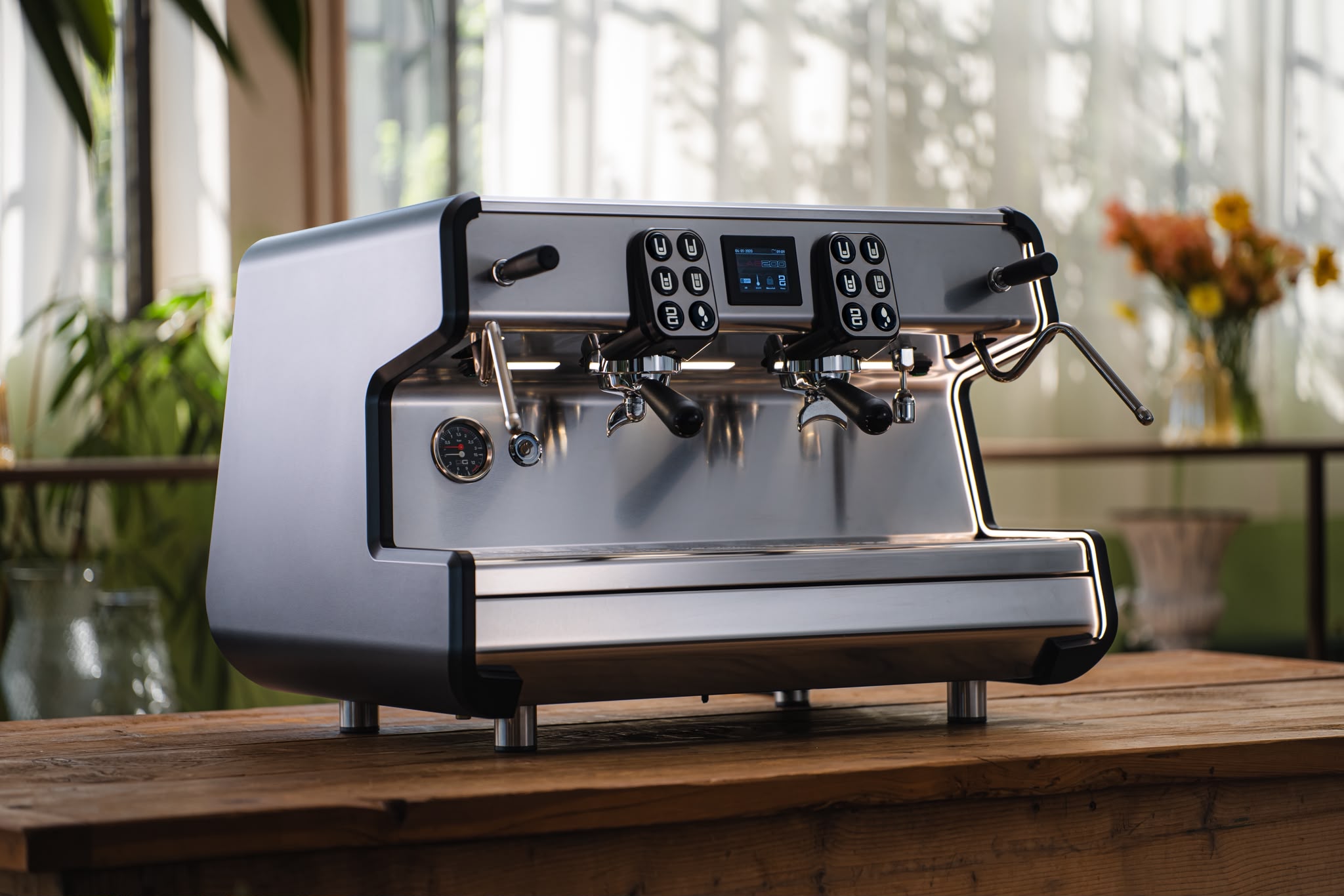
The DiGiorgio LAB200 is a two-group commercial espresso machine designed for coffee shops, restaurants and hospitality venues looking for a traditional espresso setup at a more accessible purchase price. Its stainless-steel construction and modern design make it a practical option for businesses that want professional coffee equipment without moving into the higher price brackets of premium commercial machines.
With an 11.5-litre boiler, the LAB200 is designed to support commercial coffee service across a range of hospitality settings. Its two-group configuration gives baristas the ability to prepare multiple espresso drinks during service, making it worth considering for venues with regular coffee demand.
The machine has a listed power rating of 3,000–3,400 watts and measures 860 mm wide, 540 mm high and 550 mm deep. These specifications should be checked against your available bench space and electrical installation before purchase.
For cafés comparing commercial espresso machines, the LAB200 offers a lower-cost alternative to premium models while retaining a traditional barista-led workflow. As with any commercial machine, the right choice depends on expected coffee volume, menu requirements, installation needs and access to ongoing servicing.
Best suited to: Cafés, restaurants and hospitality businesses seeking a budget-conscious, two-group commercial espresso machine.
Consider before buying: Confirm that the machine's capacity, electrical requirements and installation configuration suit your expected peak demand and site. Read our DiGiorgio LAB200 2 Group Espresso Machine Review
Buy the DiGiorgio Lab200 Now
7 La Cimbali M40 - Most Innovative Coffee Machine
Cost: $21,560 (2 group)

The La Cimbali M40 is a traditional commercial espresso machine designed to combine barista control with technology that can support efficient café service. Its ergonomic layout and touchscreen-style capacitive keypad are designed to simplify operation, while its connected features provide options for managing settings and monitoring machine performance.
The M40’s features include La Cimbali’s Eco-Smart Thermal System and, when configured with compatible equipment, its Perfect Grinding System (PGS) and Barista Drive System. These technologies are designed to support thermal efficiency, consistent grinding and dosing, and a more streamlined workflow during busy service periods.
Connectivity through La Cimbali’s digital platforms can also help operators manage machine settings and access performance information. This makes the M40 worth considering for businesses looking to combine a traditional espresso workflow with more connected equipment management.
Best suited to: Busy coffee shops and specialist barista services looking for a premium traditional espresso machine with ergonomic controls and connected features.
Consider before buying: Confirm which features and systems are included in the specific machine configuration, particularly the grinder integration and connectivity. Check the installation requirements and whether the machine’s capabilities match your expected coffee volume and staff workflow.
Buy a La Cimbali M40 Now
8 Casadio Undici 2 Group — Best Entry-Level Commercial Coffee Machine
Cost: $5,500 (2 group)

The Casadio Undici 2 Group is a practical entry-level commercial espresso machine for coffee shops looking for a traditional barista-operated setup without the price tag of a premium machine. Its straightforward controls and programmable coffee dosing make it a suitable option for businesses that want to deliver consistent espresso while keeping daily operation simple.
The Undici uses a thermosyphon system to circulate heated water through the groups, helping maintain brewing temperature during service. Its programmable volumetric dosing allows baristas to set repeatable shot volumes, while illuminated button controls make everyday operation straightforward.
With its compact design and durable steel and aluminium construction, the Casadio Undici is worth considering for coffee shops with moderate coffee demand or businesses establishing their first dedicated espresso station. As with any commercial machine, correct installation, water quality and regular preventative maintenance are important for reliable performance over time.
Best suited to: Small to medium-volume coffee shops looking for an affordable, straightforward two-group espresso machine.
Consider before buying: Assess your busiest trading periods, available bench space and electrical and plumbing requirements. Coffee shops with consistently high demand should ensure the machine’s capacity is sufficient for their expected peak service.
Buy a Casadio Undici Now
9 Slayer Steam EP - Best Overall Style
Cost: from $20,000 (2 group)

The Slayer Steam EP is renowned for its temperature stability and precise control. Each group head has its independent brew boiler with PID control, ensuring consistent and accurate temperature regulation. This feature is crucial for maintaining the quality and consistency of espresso shots, particularly in busy settings where multiple beverages are prepared simultaneously.
One of the standout features of the Steam EP is its volumetric dosing system. This allows for precise control over shot volumes, with the ability to program up to four automated shot outputs per group. The programmable Pre-Wet phase further enhances flavour extraction by allowing a 0-4 second pre-infusion of the coffee, ensuring each shot is tailored to perfection.
The user-friendly design of the Steam EP is another significant advantage. The machine features a centralised heads-up Barista Dashboard™ that simplifies operation and programming. This intuitive interface makes it easy for baristas to adjust settings, manage volumes, and maintain consistency even during peak hours. Additionally, the soft-touch steam actuators and ergonomic portafilters enhance the barista’s comfort and efficiency.
In terms of build quality and maintenance, the Steam EP is constructed with high-quality materials, ensuring durability and longevity. The electronic solenoid steam valve is designed to be low-maintenance, reducing the need for frequent rebuilds and ensuring reliable performance over time. This robustness makes it a valuable investment for establishments that demand high performance with minimal downtime.
The aesthetic appeal of the Steam EP also adds to its allure. With a low-profile design, large drip tray, and sleek anodised aluminium finish, it not only performs exceptionally but also enhances the visual appeal of any coffee bar. This design encourages customer engagement by making it easier for baristas to interact with customers while preparing beverages.
Buy a Slayer Steam EP Now
10 La Cimbali M23UP — Best for Medium-Volume Coffee Shops
Cost: from $10,510 (2 group)

The La Cimbali M23UP is a traditional two-group commercial espresso machine designed for coffee shops that need dependable day-to-day performance and straightforward operation. Its combination of programmable volumetric dosing, ergonomic controls and a thermosyphon heating system makes it a practical option for businesses looking to maintain consistent espresso preparation throughout service.
The M23UP features illuminated button controls that allow baristas to select programmed coffee doses, helping streamline drink preparation. Its thermosyphon system circulates heated water through the groups, supporting brewing temperature stability, while the dual pressure gauge lets operators monitor pump and boiler pressure during operation.
Designed with a steel body and available in different colour options, the M23UP combines a professional appearance with practical features for everyday commercial use. Its built-in volumetric pump and automatic water-level management also support normal operation, although installation and ongoing maintenance should be handled in accordance with the manufacturer's requirements.
Best suited to: Small to medium-volume coffee shops looking for a traditional two-group espresso machine with programmable dosing and straightforward controls.
Consider before buying: Compare the machine’s capacity with your busiest service periods, and confirm the required electrical supply, plumbing and available bench space before installation. Coffee shops with sustained high-volume demand should assess whether a higher-capacity machine would better suit their workflow.
Buy a LaCimbali M23 UP Now
Frequently Asked Questions
HOW DOES A COFFEE MACHINE WORK?
We've all seen espresso machines sitting elegantly on countertops: their buttons glowing, their bodies gleaming, and their steam wands poised to create silky, frothy milk. One push of a button, and it seems as though your coffee dreams come true. However, there’s much more happening beneath the surface before your coffee is ready.
The Basics of Espresso Machines
When you decide to invest in an espresso machine, you're paying for its ability to perform several critical functions efficiently. Water travels from the source to the boiler and then to the group head, while steam is generated in the boiler to power the steam wand. Understanding these processes can help you make a well-informed decision.
The Boiler: The Heart of the Machine
The boiler is the most essential component of any espresso machine. It heats and stores pressurised water from the pump. Despite its unassuming appearance—often resembling a simple cylindrical copper tank—the boiler is crucial. It uses a level sensor to allow water to pass through an inlet valve, filling it to the correct level, where electric elements then heat it to produce steam.
When purchasing a commercial coffee machine, you’ll encounter different types: single, dual, or multi-boiler machines. Some machines use a heat exchanger to heat the brewing water to the correct temperature.
Brew Temperature: The Key to Quality Coffee
Maintaining a consistent brew temperature is vital for consistently delicious coffee. Most commercial espresso machines maintain a temperature between 90-96 degrees Celsius, although this can vary depending on the coffee blend, roast degree, and desired flavour profile. Higher temperatures increase the solubility of coffee compounds, affecting the rate of extraction and ultimately, the flavour.
Saturated Group Heads
A saturated group head is an extension of the coffee boiler, surrounded by water, ensuring consistent temperature from the boiler to the espresso extraction. This setup results in a more stable and consistent brew.
Understanding these components and their functions will equip you with the knowledge to choose the best espresso machine for your needs. Whether you're running a small café or a high-volume coffeehouse, investing in the right machine will ensure you deliver exceptional coffee, cup after cup.
Single Boiler Espresso Machines
A single-boiler espresso machine uses one boiler for brewing espresso, steaming milk, and providing hot water. These machines are suitable for low-volume environments where coffee isn’t the primary focus. However, they often struggle with capacity and temperature consistency during busy periods, leading to under-extracted coffee and malfunctioning steam wands.
Heat Exchange Espresso Machines
Most single boiler machines use heat exchange technology. A heat exchanger coffee machine has a single boiler with a rod or coiled pipe running through it, heating the water for brewing. While they can handle basic functions, they may struggle with maintaining temperature consistency during high-volume use.
Dual Boiler Coffee Machines
A dual boiler machine features two separate boilers: one for generating steam and another for supplying water to the group heads. This setup allows for greater control and consistency. Modern dual boiler machines use proportional-integral-derivative controllers (PIDs) to maintain precise temperatures. Dual boiler machines are ideal for busy cafés as they handle high volumes while maintaining temperature stability.
Multi Boiler Coffee Machines
Multi-boiler machines take it a step further by allowing individual temperature control for each group head. This flexibility enables you to offer different coffee profiles without compromising on quality. Each group head can be set to a specific temperature, allowing you to serve various coffee types at their optimal brewing conditions.
WHAT IS THE BEST BRAND OF COMMERCIAL ESPRESSO MACHINE?
The best brand of commercial espresso machine truly depends on your specific needs and budget. Leading brands such as La Cimbali, La Marzocco, Eversys, Faema, Slayer, Rheavendors, Casadio, and ECM offer a range of options to suit various requirements, from high-volume operations to compact spaces. Each brand has its unique strengths, so it’s important to consider what features are most important for your business.
HOW MUCH DOES A COMMERCIAL ESPRESSO MACHINE COST?
The cost of a commercial espresso machine can vary significantly, typically ranging from AU$ 3,000 to AU$ 50,000. The wide variety available means there is an option to suit every type of coffee shop, café, or coffee service, regardless of budget. It’s crucial to invest in a machine that meets your specific needs while also considering the potential return on investment through improved service and coffee quality.
HOW LONG DOES A COMMERCIAL ESPRESSO MACHINE LAST?
Commercial espresso machines are designed for durability and can withstand daily use in a busy environment. Typically, these machines last between 7 to 10 years before they require major repairs or replacement. Regular maintenance and proper care can help extend their lifespan and ensure consistent performance.
HOW TO CHOOSE A COFFEE MACHINE
With the myriad of features and latest technologies in modern espresso machines, it’s evident that not all machines are created equally. Knowing how to choose the right coffee machine can be challenging, especially with so many new options available. Often, the most crucial factor is finding a machine that fits your budget while consistently producing flavoursome espresso at high volumes. Here’s a checklist of critical considerations to guide you in your decision:
Budget
The most significant factor in your decision-making process is your budget. Establishing a budget helps distinguish between essential features and nice-to-haves. While it’s tempting to cut costs, investing in a high-quality machine can pay off in the long run through reliability and increased sales. View your espresso machine as a long-term investment that prioritises your goals and customer satisfaction.
Size
Espresso machines come in various sizes, typically ranging from 1 to 4 group versions. For most cafés, a three-group commercial coffee machine is the most efficient for handling high demand. However, if space or power constraints exist, a two-group machine might be your only viable option.
Brew Temperature Consistency
Consistency in brew temperature is crucial for producing high-quality espresso, especially at high volumes. Customers value consistency, making it a key factor in securing repeat business. Look for machines with dual or multi-boiler systems, saturated group heads, and PID temperature control to ensure stable and precise temperature management.
User Friendliness
The user interface and features of the machine should enhance, not hinder, the workflow of you and your baristas. While high-tech machines with advanced features can be appealing, they might be overly complex and unnecessary for your café’s needs. Ensure that both you and your staff are comfortable with the machine’s operation before making a purchase.
Control Options: Push Button vs Paddle
Espresso machines typically use either touchpad/push button controls or paddle controls to manage extraction. Each has its own set of advantages and disadvantages, and the choice often comes down to personal preference. Some baristas prefer the quick and easy touchpad, while others favour the precision and artisanal feel of paddle controls. Choose the option that best suits your workflow and barista preferences.
Shot Timers
If your budget allows, opt for a machine with a clear, digital shot timer. Shot timers are invaluable for ensuring consistent espresso shots, streamlining workflow, and diagnosing any issues with your machine. They provide a significant advantage in maintaining quality control.
Aesthetics
While the appearance of your machine doesn’t affect the quality of the espresso, it can influence customer perception and satisfaction. A customised machine can catch the attention of customers and make them proud to be associated with your café. It also makes a strong impression on competitors. If your budget permits, allocating funds for customising your machine can be a worthwhile investment.
When choosing a coffee machine, consider these factors carefully. Balancing budget, functionality, and aesthetics will help you select a machine that meets your needs and enhances your café’s reputation.
WHAT ABOUT A LEVER ESPRESSO MACHINE?
Lever espresso machines are not only aesthetically pleasing but also offer a unique brewing experience. However, they come with their own set of challenges, particularly in achieving consistent espresso shots. The manual nature of these machines requires a higher level of skill and experience, making them more suitable for high-end coffee shops and espresso bars where baristas are up for the challenge.
DO YOU RECOMMEND A SUPER-AUTOMATIC ESPRESSO MACHINE?
Super-automatic espresso machines, which grind beans and pull shots at the push of a button, are designed for convenience rather than quality. While they simplify the espresso-making process, they often fall short in delivering the superior taste and texture expected from traditional machines. For this reason, we typically do not recommend super-automatic espresso machines for establishments prioritising high-quality coffee.
HOW GOOD IS THE COFFEE FROM AN AUTOMATIC MACHINE?
When assessing the quality of coffee produced by automatic machines, it’s important to note that fresh bean to cup espresso machines, which grind the coffee beans for each cup, generally yield much better and healthier coffee compared to pod machines.
Fresh Bean Machines
For fresh bean machines, ensure the machine allows you to program various coffee strengths, select from 2-3 heat levels, and adjust the milk volume. These features enable you to refine and customise your drinks to your exact preferences. For those who are particularly discerning about their coffee, check if the machine includes a Coffee App that allows individual programming from your phone, offering a higher level of personalisation.
Quality and Extraction
The key to achieving barista-quality coffee with an automatic machine lies in the extraction process. If the machine extracts the coffee well and you use fresh milk along with high-quality beans, the result can be remarkably close to what you would get from a skilled barista.
Trial and Tasting
Before committing, it is advisable to either trial the machine for a few days or visit a showroom to taste-test various options. This hands-on experience will help you determine which machine meets your taste and performance expectations.
Additional Features
Consider additional features such as the ability to make different coffee styles (espresso, cappuccino, latte, etc.), ease of cleaning, and durability. These factors contribute to the overall quality and satisfaction of the coffee experience provided by the machine.
By carefully evaluating these aspects and testing the machine beforehand, you can ensure that your automatic coffee machine delivers a high-quality coffee experience that satisfies even the most discerning coffee enthusiasts.
Frequently Asked Questions About Commercial Espresso Machines
What should I consider when choosing a commercial espresso machine?
When choosing a commercial espresso machine, consider your expected daily coffee volume, the number of group heads required, boiler configuration (heat exchange or multi-boiler), available bench space, power and plumbing requirements, and the skill level of your staff. Reliability, service support, and long-term running costs are just as important as upfront price.
How many group heads do I need?
As a general guide:
-
1 group suits low-volume venues serving up to 100–150 coffees per day
-
2 groups are ideal for cafés and offices with moderate demand
-
3 or more groups are best for high-traffic hospitality environments
Higher volume venues benefit from more group heads to maintain speed and temperature stability during peak periods.
What is the difference between heat exchange and multi-boiler machines?
Heat exchange machines use a single boiler to brew coffee and generate steam simultaneously, making them cost-effective and compact. Multi-boiler machines use separate boilers for brewing and steaming, offering superior temperature control and consistency—particularly important for high-volume or specialty coffee venues.
Should I buy a manual, semi-automatic or fully automatic espresso machine?
Manual and semi-automatic machines provide greater control and are preferred where trained baristas are available. Fully automatic and super-automatic machines prioritise speed, consistency, and ease of use, making them ideal for offices, self-serve environments, or venues with high staff turnover.
Do commercial espresso machines require professional installation?
Yes. Commercial espresso machines typically require dedicated power, plumbing, drainage, and water filtration. Professional installation ensures the machine operates safely, meets compliance requirements, and performs as intended from day one.
What ongoing costs should I expect?
Beyond the purchase price, ongoing costs include electricity, water filtration, routine servicing, replacement parts, cleaning products, and grinder maintenance. Factoring these into your budget helps avoid unexpected expenses over the machine’s lifespan.
How often does a commercial espresso machine need servicing?
Daily cleaning and weekly maintenance are essential, while professional servicing is usually recommended every 6–12 months depending on usage. Regular servicing helps prevent breakdowns, protects internal components, and ensures consistent coffee quality.
How does water quality affect a commercial coffee machine?
Poor water quality can cause scale buildup, corrosion, and inconsistent extraction. Installing an appropriate water filtration system protects the machine, improves flavour, and extends the life of internal components.
How long does a commercial espresso machine typically last?
With proper maintenance and servicing, a quality commercial espresso machine can last 7–15 years or more. Longevity depends on build quality, usage volume, water quality, and adherence to recommended maintenance schedules.
Are commercial espresso machines energy efficient?
Modern commercial espresso machines often include energy-saving features such as insulated boilers, programmable on/off timers, and standby modes. These features can significantly reduce power consumption during quieter periods.
Can I lease or rent a commercial espresso machine instead of buying?
Yes. Leasing or renting can reduce upfront costs and often includes servicing and support. Buying outright may offer better long-term value, while leasing provides flexibility and predictable monthly expenses.
Do I need a commercial grinder as well?
Absolutely. A high-quality commercial grinder is essential for consistent extraction and coffee quality. Even the best espresso machine will underperform without a grinder designed for commercial workloads.
WHAT ELSE DO YOU NEED TO BUDGET FOR?
While the espresso machine is the central piece of equipment in a coffee setup, it’s not the only item you’ll need. Ensure you allocate part of your budget for essential accessories such as a conical burr grinder (preferably dedicated to espresso), cups, saucers, shot glasses, and milk pitchers. These items are crucial for maintaining the quality and presentation of your coffee service. Additionally, consider investing in proper maintenance tools and cleaning supplies to keep your machine in top condition.
Need Some Help?
Why Buy from Service Sphere?
Service Sphere is one of Australia’s most established suppliers of commercial coffee equipment, with over 50 years of experience serving the hospitality industry. We are not just a retailer — we are a full-service coffee equipment partner, offering sales, installation, genuine parts, and ongoing preventative maintenance nationally.
|
Australian Industry Leader A privately owned, family business with more than five decades serving Australian cafes, restaurants, and hospitality businesses. |
Full-Service Support From installation and commissioning through to ongoing preventative service and technical training, we support your machine throughout its entire working life. |
|
Genuine Parts Supply We stock an extensive range of genuine La Marzocco parts, so when your machine needs attention, we have what your technician needs — fast. |
Authorised Agency Service Sphere holds authorised Australian agency relationships with world-leading coffee equipment brands, ensuring every machine sold is fully backed. |
|
Technical Training We offer technical training programs to help your team get the most from your equipment and extend the working life of your investment. |
National Reach Service Sphere operates nationally across Australia, so wherever your business is located, our support network can reach you. |
Service Sphere Price Match GuaranteeWe always endeavour to offer the most competitive prices available on commercial coffee equipment in Australia. If you find the same product at a lower price from another Australian retailer, simply submit the details through our Price Match page and our team will work to match or beat that price. You should never have to choose between quality service and competitive pricing.
Submit a Price Match Request
|